Stuart Hall
-
The reception theory is that when the producer creates media text they'll insert encoded messages or meanings into it their work, these messages are then decoded by the audience. Although, some audiences will decode these messages in different way and sometimes not in the way the producer had originally intended.
There are different types of audiences when decoding text, the first one is dominant or preferred reading, this is where the audiences decodes the text how to producer had intended. Audience members will take this position if the messages or meanings are clear to them, this can differ due to there age or culture etc. The second types of audience is oppositional reading, this is when the audience rejects the meaning that the producer had intended and creates their own meaning. Oppositional reading can arise if the audience member is a different age, culture or the narrative is unclear to them. The final type is negotiated reading, this is where the audience member is stuck between the dominant and oppositional reading, therefore they accept part of the producer's views but they also have their own views on the story.
Friday, February 1, 2019

Friday, December 14, 2018
Representation
Representation
-

-
Black power

This image is very inspirational, gives people hope and symbolises a key point in black history.
Black actor struggles over the last 50 years
-
Sidney Poitier was one of the first black actors on screen and in 1964 he was the first ever black person to win an Academy Award for Best Actor. When he moved to the U.S. he started to experience racism chasm, an impulsive audition at American Negro Theatre and was rejected forcefully.
A black actor named John Marriott who was an extremely well-trained actor was harassed by film crews who "purposely went out of the way to sabotage his career, the technicians would adjust the lights so that there wasn't one shot that you could clearly recognise him".
Choose and define character
- Black female
- 18 years old
- University student
- Studies music
Advertising
What is advertising?
-
When a product us manufactured, its existence needs to be made known to the general public
Advertising appeals
-
Advertising appeals are communication strategies that marketing and advertising professionals use to grab attention and persuade people to buy or act.
In rhetorical theory the idea of an 'appeal' dates back to Aristotle.
Ethos : an appeal to credibility or character
-
An advertisement using ethos will try to convince you that the company in the more reliable, honest and credible.
Ethos often involves statistics from reliable experts, such as nine out of ten dentists agrees that crest is the better than other brand.
Pathos : an appeal to emotion
-
Evoke an emotional response in the consumer. Sometimes, it is a positive emotion such as happiness : an image of people enjoying themselves while drinking coke.
Other times advertisers will use negative emotions such as pain : a person having back problems after buying the 'wrong' mattress.
Logos : an appeal to logic or reason
-
An advertisement using logos will give the evidence and statistics you need to fully understand what the product does.
The logos of an advertisement will be the "straight facts" about the product : one glass of Florida orange juice contains 75% of you daily vitamin C needs.
-
When a product us manufactured, its existence needs to be made known to the general public
Advertising appeals
-
Advertising appeals are communication strategies that marketing and advertising professionals use to grab attention and persuade people to buy or act.
In rhetorical theory the idea of an 'appeal' dates back to Aristotle.
Ethos : an appeal to credibility or character
-
An advertisement using ethos will try to convince you that the company in the more reliable, honest and credible.
Ethos often involves statistics from reliable experts, such as nine out of ten dentists agrees that crest is the better than other brand.
Pathos : an appeal to emotion
-
Evoke an emotional response in the consumer. Sometimes, it is a positive emotion such as happiness : an image of people enjoying themselves while drinking coke.
Other times advertisers will use negative emotions such as pain : a person having back problems after buying the 'wrong' mattress.
Logos : an appeal to logic or reason
-
An advertisement using logos will give the evidence and statistics you need to fully understand what the product does.
The logos of an advertisement will be the "straight facts" about the product : one glass of Florida orange juice contains 75% of you daily vitamin C needs.
Thursday, November 8, 2018
Subjective and Objective
Subjective, has feelings, anything subjective is subject to interpretation. Usually subjective means influenced by emotions or opinions.
Objective, is a goal and to be objective usually means to be unbiased. If you're objective about something you have no personal opinion / feeling about it.
Objective, is a goal and to be objective usually means to be unbiased. If you're objective about something you have no personal opinion / feeling about it.
Friday, October 26, 2018
Camera movement
Motivated camera movement
-
The camera moves directly with the action being shown, for example if a character moves across the screen the camera tilts, pans, or physically moves by hand or on a dolly.

Unmotivated camera movement
-
When a camera move is imposing on the action rather than just following it, this is used for emphasis of any kind.
Zoom
-
This is when you magnify an element of the scene, the camera itself doesn't actually move during this movement, it is done with a lens. This type of zoom is usually slow, which builds drama, suspense and tension.
Example : https://youtu.be/ZbMtUL-69_g?t=85
Crash zoom
-
This is the same as a normal zoom but is done a lot faster, this is used mostly to shock, reveal action suddenly or to just reveal something.
Example : https://youtu.be/kjZ9EQ7LMD8?t=8
Pan / whip pan
-
When the camera moves on it's horizontal axis, left to right or right to left.
Camera movement practical
-
-
The camera moves directly with the action being shown, for example if a character moves across the screen the camera tilts, pans, or physically moves by hand or on a dolly.

Unmotivated camera movement
-
When a camera move is imposing on the action rather than just following it, this is used for emphasis of any kind.
Zoom
-
This is when you magnify an element of the scene, the camera itself doesn't actually move during this movement, it is done with a lens. This type of zoom is usually slow, which builds drama, suspense and tension.
Example : https://youtu.be/ZbMtUL-69_g?t=85
Crash zoom
-
This is the same as a normal zoom but is done a lot faster, this is used mostly to shock, reveal action suddenly or to just reveal something.
Example : https://youtu.be/kjZ9EQ7LMD8?t=8
Pan / whip pan
-
When the camera moves on it's horizontal axis, left to right or right to left.
Camera movement practical
-
Friday, October 12, 2018
Rendering and compression
Resolution definition
-
1920 x 1080p
1280 x 720p
The higher the resolution, the better the image detail is.
480p
360p
Lucas film
-
Codec ; code and decode e.g.
H.267
H.264
MPEG ; moving pictures experts group
.m2v - MPEG 2
.ac3 - Dolby 2
Muxed - video + audio
Lossy
-
Compressed ; small file size Mb
.mp4
.wmv
Lossless
-
Uncompressed ; large file size Gb
.avi
.mov
-
1920 x 1080p
1280 x 720p
The higher the resolution, the better the image detail is.
480p
360p
Lucas film
-
Codec ; code and decode e.g.
H.267
H.264
MPEG ; moving pictures experts group
.m2v - MPEG 2
.ac3 - Dolby 2
Muxed - video + audio
Lossy
-
Compressed ; small file size Mb
.mp4
.wmv
Lossless
-
Uncompressed ; large file size Gb
.avi
.mov
Sunday, October 7, 2018
Editing
Order of shots


-
Pace and Rhythm

- The meaning of a sequence can change depending on the order of the shots.
- Putting two shots together can suggest a connection or emphasize contrast (juxtaposition).
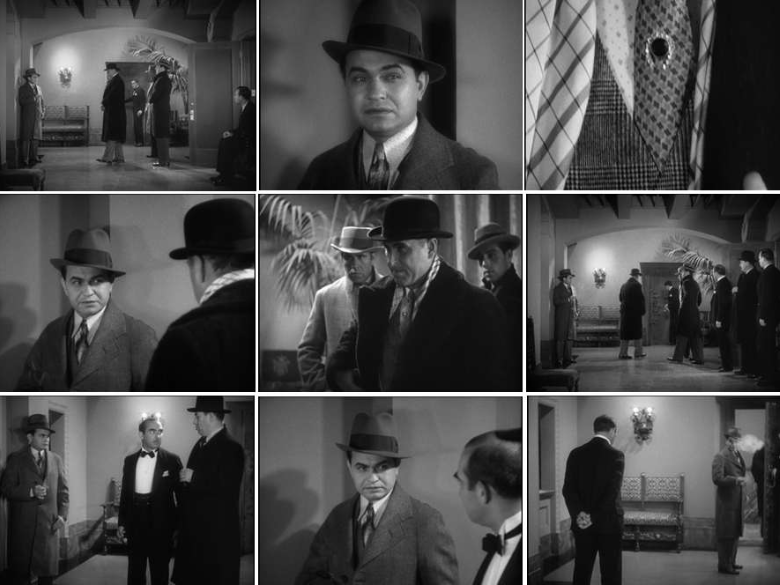
Soviet montage theory
- The Kuleshov effect is a concept in the film making created by Lev Kuleshov in the 1920s.
- Sergei Eisenstein, the idea that placing together separate sections of film could create ideas or have an impact beyond the individual shots.
Transitions
- The process of moving from one shot to another.
- The most commonly used transition is a cut.
-
Fade
- Preceding shot fades into a black solid.
Dissolve or cross fade
- The preceding shot merges into the following shot, resulting in the two shots being superimposed.
-
Pace and Rhythm
- Duration of a shot will usually reflect the narrative context.
- Short shots conveys action and urgency.
- Long shots create a slower pace and convey intensity and intimacy within the narrative; it allows us to focus upon facial expressions and the other aspects of the mise-en-scene.
Continuity
- Cutting shots to tell a story with narrative continuity.
- Helping the viewer make sense of action by implying spatial relationships and ensuring smooth flow from shot to shot.
- Creates realism.
Friday, October 5, 2018
Video Clips
Clips
-
Incoming and outgoing clips
Non sync - offset
Highlight video and audio clips - Right click - synchronize
When editing audio and you want to cut a part of it out, you can cut the bit you don't want and then to make it sound smooth go to Effects - audio transitions - constant power

Interview example
-
https://www.youtube.com/watch?v=Zjfg5_JpzE0
-
Incoming and outgoing clips
Non sync - offset
Highlight video and audio clips - Right click - synchronize
When editing audio and you want to cut a part of it out, you can cut the bit you don't want and then to make it sound smooth go to Effects - audio transitions - constant power

Interview example
-
https://www.youtube.com/watch?v=Zjfg5_JpzE0
Wednesday, October 3, 2018
Narrative Theory
Narrative Theory
-
Tzvetan Todrov


-
Tzvetan Todrov
- The fictional environment begins with a state of equilibrium, e.g. everything is as it should be in a state of equal balance between powers of any kind.
- It then suffers some disruption or disequilibrium.
- At the resolution a new equilibrium is produced.

Vladimir Propp
- Based on ancient folk tales.
- He said that all narratives features a set of stock characters.
- These include : hero , villain , donor , helper , princess (objective / goal) , father , dispatcher , victim , false hero.
Levi-strauss
- Binary oppositions
- He states that a constant creation of conflict or opposition propels a narrative.
- He believed that they narrative could only end on a resolution of the conflict.
- Binary opposites e.g.
- Visual - light vs darkness, movement vs stillness
- Conceptual - love vs hate, control vs panic
- Narrative or genre based - good vs evil, earth vs aliens, cops vs robbers
Sunday, September 30, 2018
Photoshop poster
Idea generation
-
My poster was inspired by two different GOT posters that I had seen online and my idea was to combine the two designs to create my own poster. The first deign was of the Game of Thrones title with a smoke / cloud look behind it and the second design was the have one of the main characters in the center behind the text with a grunge effect.


Final poster
-

-
My poster was inspired by two different GOT posters that I had seen online and my idea was to combine the two designs to create my own poster. The first deign was of the Game of Thrones title with a smoke / cloud look behind it and the second design was the have one of the main characters in the center behind the text with a grunge effect.


Research
-
Some other examples of posters I looked at were :


Target Audience
-
My target audience is young adults both male and female. This is because recent surveys have show that most the Game of Thrones' viewers are between the ages of 18-24 and some under 18.
Design Visuals
-
When creating the poster I decided to have bleeding edges and three columns so that the picture is center and the text sits within the boarders. First I started with off the the image of Sansa, on top of that added an image of a cracked wall, I used the warp tool to make it look like it was wrapping round here face. I then played around with the liquify until I got the look I wanted, after doing so I changed the blending mode to 'darken' and slightly adjusted the opacity. Then I duplicated the layer, inverted it, turned the blending mode to 'screen' and toggled the 'blend if' settings to give the cracks a shadow effect. I then added some brightness and gradient adjustment layers.
For the text I used two fonts called 'game of thrones' and 'Trajan pro'. In order to make the top of the 'T' longer I converted it to shape and used the 'direct selection tool' to move it. I then added an 'emboss' effect and an outer glow and some clouds in the background. Finally I adjusted the colours.

-

Friday, September 28, 2018
Learning Premiere Pro
Premiere Pro
Short cuts
-
Space bar - play / pause
Arrow keys - L&R forward and back
Ctrl / Cmd Z - undo
Ctrl / Cmd X - cut
Ctrl / Cmd C - copy
Ctrl / Cmd V - paste
C - cut / razor
V - arrow tool
(-) (+) - zoom in and zoom out
K - play
L - foward
J - backwards
I - in point
O - out point
Home - start of timeline
Backslash -
Backspace - delete
Editing the footage
-
First we imported the footage by right clicking the bin then importing the file, we then put the clip into the source box and pressed 'I' at the point we wanted to footage to start and 'o' where we wanted it to end. After doing this we dragged the footage onto the timeline and repeated the process with another clip. In order the sync the audio we pressed 'cmd + a', right clicked and pressed 'synchronise'. Then we played around cutting the clips by pressing 'c'. To play back what we had done we pressed the space bar.

Wednesday, September 26, 2018
Press release
Press Release : About me

For my press release I talked about how I wanted to travel and used bright colours and a type writer font.
Mise - en - scene
What is mise - en - scene?

-
This is everything you see on the screen.
What are the different elements even on the screen?
- Costume / hair / make-up
- Props / setting
- Lighting / colour
- Location
- Facial expression / body language
- Position of characters and objects in a frame
Costume, hair and makeup
-
Certain costumes can signify certain individuals.
Props and setting
-
This can manipulate an audience by building certain expectations and then taking a different turn.
Lighting and colour
-
Used to achieve a variety of effects, this includes :
- The key light
- The fill light
- The back light
Low key lighting - using only the key backlight
High key lighting - more filler, lighting is natural, produces a brightly lit set or a sunny day.
Facial expressions and body language
-
This can indicate how a character feels towards another character or their emotional state in general.

Friday, September 21, 2018
Audio
Audio
-
Human can hear 20 - 20,000 Hz
-
Wavelength
-
Wildtrack - background noise
-
VU meter
-
Audio distortion P.P.M.


TV Programe
-
Voice 5.5ppm
SFX 3ppm
Music 4 ppm
-
L & R 2 channels
A critical part of a surround sound system, it can't help with the front to back movement but it does surround you.
-
Mic onboard (voice ambient)
-
Mic external (voice ambient)
-
Boom directional mic (record voice)
-
Shotgun / Rife 4/6
The mic records directly to the DSLR or digital audio recorder.
-
Waveform
-


T.C. Timecode 10:00:00:00
-
How do set your timecode?
In the top left corner of your timeline click on the three small black lines next to 'black video', this will bring down a menu and you have to click on 'start time'. Here you can change the timecode from 00:00:00:00 to 10:00:00:00.

Target audience
Audiences are categorised into groups from A to E.
-
Group A
Upper middle class - higher managerial, administrative or professional.
Group B
Middle class - intermediate managerial, or professional.
Group C1
Lower middle class - supervisory or clerical, junior managerial, administrative or professional.
Group C2
Skilled working class - skilled manual workers.
Group D
Working class - semi and unskilled manual workers.
Group E
Those at the lowest level of subsistence - state pensioner or windows (no other earner), casual or lowest grade workers.
Examples
-
iPhone X : price £999
iPhone X Max : price £1,090
Target audience and what group they go into
-
Apple aim the iPhone X at people with a high household income and the majority of there audience is within groups C2 or higher as for a lot of customers the product is very expensive.
-
Group A
Upper middle class - higher managerial, administrative or professional.
Group B
Middle class - intermediate managerial, or professional.
Group C1
Lower middle class - supervisory or clerical, junior managerial, administrative or professional.
Group C2
Skilled working class - skilled manual workers.
Group D
Working class - semi and unskilled manual workers.
Group E
Those at the lowest level of subsistence - state pensioner or windows (no other earner), casual or lowest grade workers.
Examples
-
iPhone X : price £999
iPhone X Max : price £1,090
Target audience and what group they go into
-
Apple aim the iPhone X at people with a high household income and the majority of there audience is within groups C2 or higher as for a lot of customers the product is very expensive.
Wednesday, September 19, 2018
Types of sound
Diegetic sound
-
This is sound that has a physical origin in the film world it can either be on screen or off screen.
-
This is sound that has a physical origin in the film world it can either be on screen or off screen.
- voices of characters
- sounds made by objects in the story
- music represented as coming from the instruments in the story space
- the story space
Non - diegetic sound
-
This is sound that has no direct origin in the film world, it can be represented as coming from a source outside the story line.
- narrator's voice
- sound effect
Dialogue
-
This is the words spoken by the characters within the scene
Voice over
-
When a narrator or a character is heard talking over the images you are seeing on the screen.
Music (score)
-
This is used to heighten the emotion and drama of a scene, it is usually music played within the background of a scene.
Sound effects
-
A recorded sound other than speech or music which is added to the soundtrack to enhance the narrative.
Friday, September 14, 2018
Pixels

Questioning the text 2
The Originals
-
A1. Identify the text's form and genre. Is the text a: charity advert? regional newspaper? TV sit-com? action film trailer?


-
A1. Identify the text's form and genre. Is the text a: charity advert? regional newspaper? TV sit-com? action film trailer?
- Fantasy
- Supernatural
- TV series
A2. Identify the text's target audience. Is it for: youths? males? parents? a broad mainstream audience?
- Young / teenagers female
A3. Identify the text's primary function. Has the text been created to: inform? entertain? sell? persuade? something else?
- The purpose of the text is for entertainment

Questioning the text
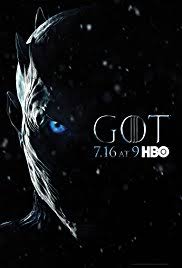
Game of Thrones
-
A1. Identify the text's form and genre. Is the text a: charity advert? regional newspaper? TV sit-com? action film trailer?

-
A1. Identify the text's form and genre. Is the text a: charity advert? regional newspaper? TV sit-com? action film trailer?
- TV series
- Fantasy
- Drama
A2. Identify the text's target audience. Is it for: youths? males? parents? a broad mainstream audience?
- Young adults both female and male
A3. Identify the text's primary function. Has the text been created to: inform? entertain? sell? persuade? something else?
- The purpose of the text is for the audience's entertainment.
Wednesday, September 12, 2018
Shot Types
Shot types
-
Cinematography
The art of photography and camerawork in film-making.
-
Extreme long shot (XLS)


Medium long shot (MLS)

Medium shot (MS)
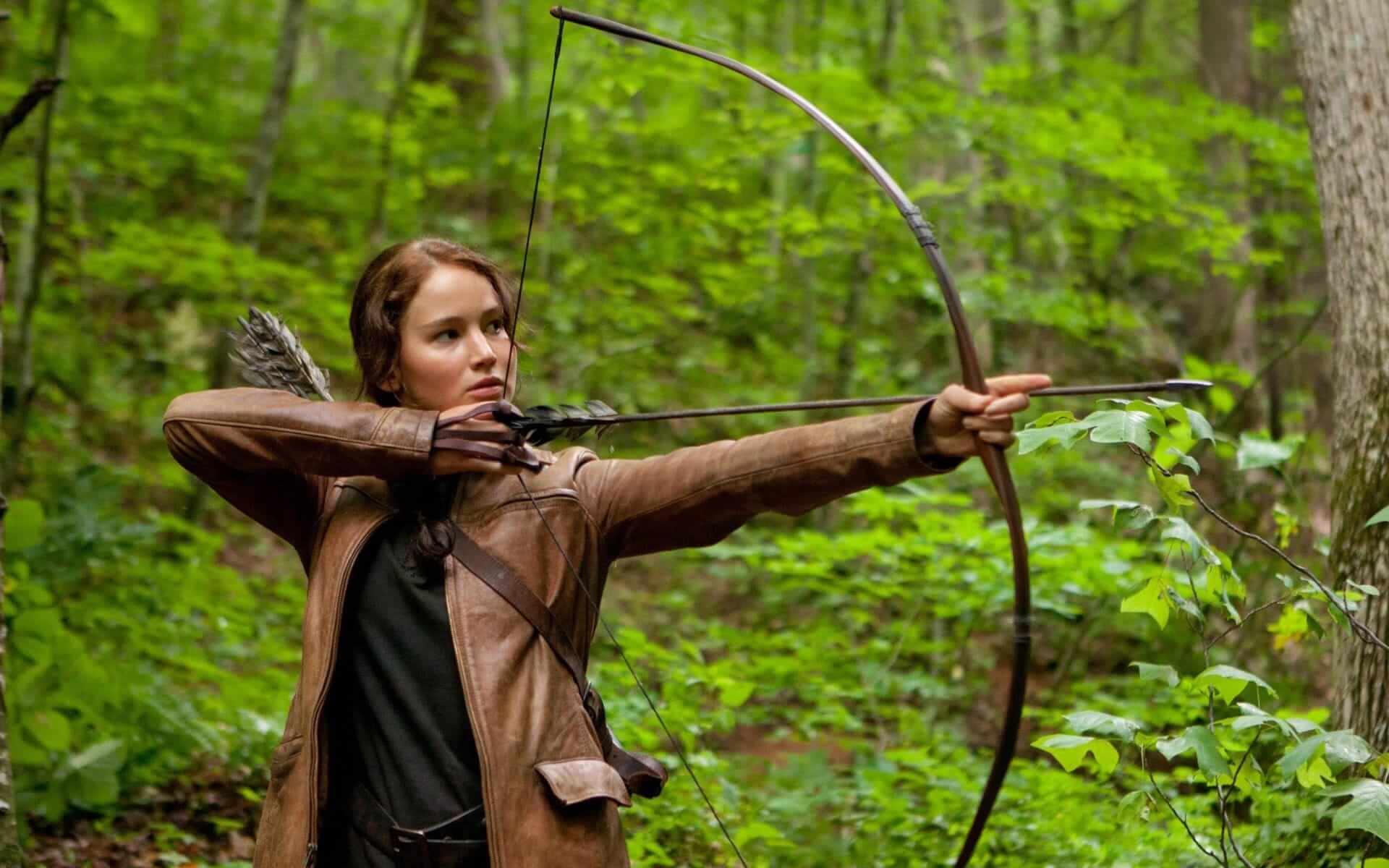
Medium close-up (MCU)

Close-up (CU)

Extreme close-up (ECU)


-
Cinematography
The art of photography and camerawork in film-making.
-
Extreme long shot (XLS)
- Covers wide area.
- Shows the whole subject and it's surroundings.
- Gives context for your scene.
Long shot (LS)
- Shows the whole subject from head to toes.
- The focus is the subject but the environment is also visible.
- It's used to show action instead of emotion.
Medium long shot (MLS)
- Shows the whole subject from the knees up.
- It's an intermediate shot between the long shot and the medium shot.
- Shows the subject and they're surroundings.
- It can be used when they have 2 or 3 people in the frame.

Medium shot (MS)
- Shows the subject from the waist up.
- Normally used during interviews.
- Directs the viewer to the subject.
Medium close-up (MCU)
- Shows the subject's head and cuts off around mid-chest.
- The focus is on the subject.
- Shows very little of the subject's surroundings.
- It shows the facial expressions of the subject.
- Normally used in interviews in documentaries and new programs.
Close-up (CU)
- Frames the subject's face and its off mid-neck, revealing the face and entire head.
- The subject fills almost the entire frame.
- Captures facial expressions and emotions.
- Shows just the person's facial features.
- Frames only a portion of the subject.
- Used to show the person's emotions.

High camera angle
- A cinematic technique where the camera is looking down on the subject.
- Used to show vulnerability of the subject when applied with the current mood, setting, and effects.
- Makes a scene more dramatic.

Low camera angle
- When the camera is positioned low on the vertical axis, anywhere below the eyeliner.
- This angle is typically used to show the subject as being powerful and strong.

Dutch camera angle
- When the camera is set at an angle on it's roll axis.
- Used to portray psychological uneasiness or tension in the subject being filmed.

Subscribe to:
Posts (Atom)
-
Shot types - Cinematography The art of photography and camerawork in film-making. - Extreme long shot (XLS) Covers wide area. Sho...
-
 Order of shots The meaning of a sequence can change depending on the order of the shots. Putting two shots together can suggest a connec...
-
 Audio - Human can hear 20 - 20,000 Hz - Wavelength - Wildtrack - background noise - VU meter - Audio distortion P.P.M. ...


